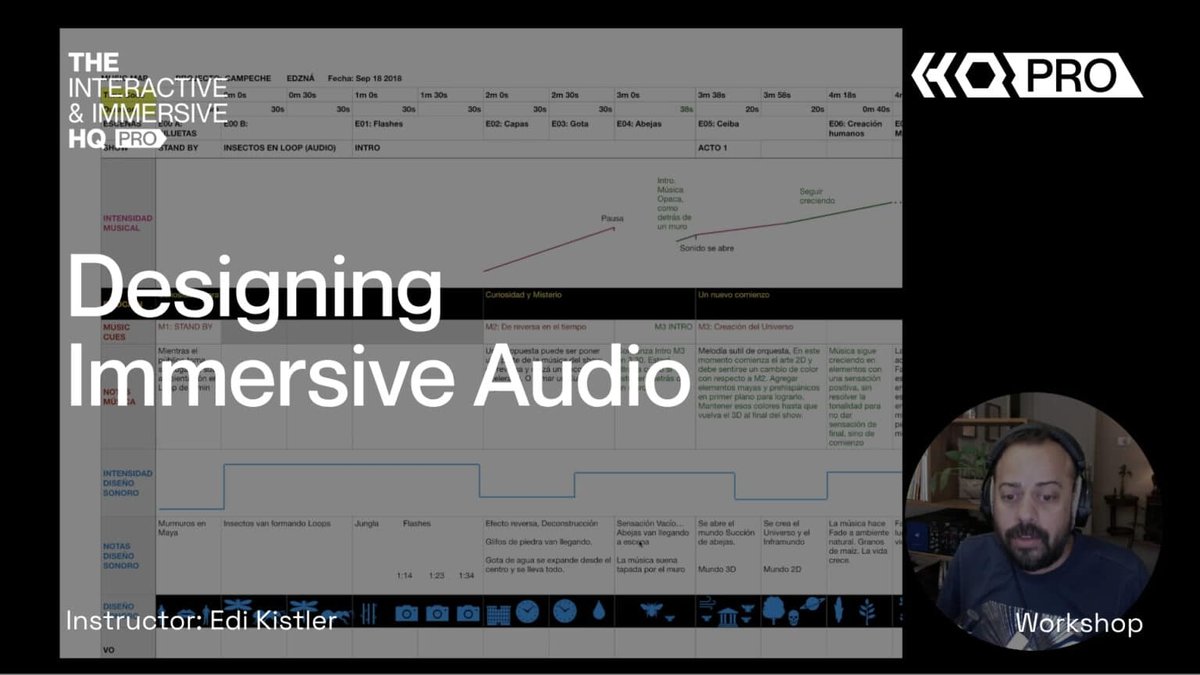
The sound isn't just coming at you anymore; it's surrounding you, enveloping you. From blockbuster film scores to hyper-realistic video games and even the next generation of music production, Immersive Audio Hardware & Software Essentials are redefining how we experience sound. If you're ready to step beyond stereo and craft sonic worlds that truly transport your audience, you're in the right place. This guide is your compass to navigating the exciting, sometimes complex, landscape of spatial audio.
At a Glance: Your Immersive Audio Roadmap
- Immersive audio goes beyond traditional stereo or surround sound, creating a 3D soundfield.
- It requires a blend of specialized hardware (more speakers, powerful interfaces, robust processing) and intelligent software (DAWs, spatialization plugins, rendering engines).
- Dolby Atmos is a leading format, supported by many tools and workflows.
- Key software tools include advanced reverbs, spatializers, and binaural virtualization for headphone monitoring.
- "Immersive:: Essentials" is an example of a software bundle offering critical processing tools for immersive mixing.
- Careful setup, calibration, and monitoring are crucial for accurate immersive productions.
- The field is rapidly evolving, demanding continuous learning and adaptation.
What Exactly Is Immersive Audio? Beyond the Flat Plane
For decades, our listening experiences have largely been confined to a "soundstage" in front of us, whether through stereo speakers or even traditional 5.1/7.1 surround systems. While effective, these setups create a relatively flat, horizontal plane of sound. Immersive audio shatters this limitation, adding the crucial dimension of height.
Think of it like this: stereo audio is a painting on a wall. Surround sound might add a wider canvas. Immersive audio builds an entire sculpture you can walk around and even reach into. It achieves this by precisely placing sound sources not just around you, but also above and sometimes below you, creating a truly three-dimensional sonic environment. This isn't just about more speakers; it's about intelligent processing that understands how sound behaves in space, tricking your brain into perceiving depth, distance, and direction from every angle.
Why Immerse? The Creative and Commercial Imperative
The push for immersive audio isn't just a technical flex; it's driven by a powerful desire to enhance storytelling, entertainment, and even communication. When you can literally place a buzzing fly above a character's head or make a musical note soar through the air and land behind the listener, the emotional impact is undeniable.
For filmmakers, immersive sound adds another layer of realism and tension, drawing viewers deeper into the narrative. Gamers experience unparalleled spatial awareness, hearing footsteps above them or an explosion detonating behind their virtual character. Musicians are discovering entirely new canvases for expression, allowing melodies to dance around listeners and harmonies to bloom in a truly enveloping way. Even in podcasting and virtual reality, immersive audio creates a more intimate and engaging connection, transforming passive listening into an active experience. This innovative approach offers the broader benefits of spatial audio across numerous creative and commercial applications.
The Hardware Foundation: Building Your Immersive Environment
Before you can sculpt sound in 3D, you need the right physical infrastructure. This isn't just an upgrade; it's a re-think of your studio space.
Monitors & Speaker Configurations: Beyond the Stereo Pair
Forget your trusty stereo monitors for a moment. Immersive audio demands multiple speakers, strategically placed, to create its magic. The most common configurations you'll encounter are:
- Binaural Headphone Monitoring: While not a "speaker setup," specialized software can simulate immersive environments through headphones. This is often an essential monitoring tool, especially for creators working in less-than-ideal acoustic spaces or for consumer delivery formats.
- 7.1.4 (or 5.1.4): The Home Studio Sweet Spot: This typically involves seven (or five) speakers on the horizontal plane, a subwoofer (the ".1"), and four overhead speakers (the ".4"). This configuration offers a robust entry point into immersive production, providing a good balance of channels and spatial resolution.
- Larger Configurations (9.1.6, 22.2, etc.): Professional studios and cinema mixing stages often boast significantly more speakers, offering greater precision and finer control over sound object placement. These require substantial acoustic treatment and powerful processing.
Regardless of your chosen configuration, the quality of your speakers matters immensely. They should be full-range, well-calibrated, and ideally matched for consistent timbre across the soundfield.
Audio Interfaces & Converters: The Channel Juggernaut
With so many speakers, you'll quickly realize your standard 2-channel or 8-channel audio interface won't cut it. Immersive setups demand interfaces with a high channel count – we're talking 16, 32, or even 64 outputs to feed all those individual speakers.
Key considerations for your immersive audio interface:
- Input/Output (I/O) Count: Ensure it has enough analog outputs for your speaker configuration, plus any necessary inputs for recording.
- Connectivity: Look for robust, high-bandwidth connections like Thunderbolt, Dante, or MADI to handle the massive data flow.
- Conversion Quality: Pristine AD/DA conversion is critical to maintain audio fidelity across all channels.
- Low Latency: Especially important for real-time monitoring and processing.
For anyone choosing the right audio interface, the expanded channel count is a primary concern in immersive contexts.
Processing Power & Storage: A Demanding Environment
Running a complex immersive session—with dozens of tracks, numerous spatialization plugins, and real-time rendering—is incredibly taxing on your computer's resources. You'll need:
- Powerful CPU: A multi-core processor is non-negotiable for handling the computational load.
- Ample RAM: 32GB is often a minimum, with 64GB or more being ideal for larger projects.
- Fast Storage: SSDs (NVMe preferred) are essential for quick project loading and seamless playback of large audio files. External Thunderbolt or networked storage solutions might also be necessary.
Monitoring & Calibration Tools: Trust Your Ears (and Your Measurements)
Accurate monitoring is paramount in immersive audio. If your system isn't calibrated correctly, your mix won't translate to other systems.
- SPL Meter: For balancing speaker levels.
- Room Measurement Software (e.g., Room EQ Wizard) & Measurement Mic: To analyze your room's acoustic response and identify issues like standing waves or reflections.
- Calibration Software (e.g., SoundID Reference): To flatten your speakers' frequency response and ensure phase coherence.
- Acoustic Treatment: Don't underestimate the importance of absorbers, diffusers, and bass traps. Even the best gear can't fix a bad room.
The Software Brains: Orchestrating Your Immersive Soundscape
Hardware provides the canvas, but software brings the sonic world to life. This is where you manipulate, spatial, and render your audio in three dimensions.
Digital Audio Workstations (DAWs) for Immersive Audio
Not all DAWs are created equal when it comes to immersive audio. You need a platform built to handle high channel counts, object-based mixing, and integration with immersive formats. Popular choices include:
- Avid Pro Tools Ultimate: Long the industry standard, Pro Tools Ultimate offers native support for Dolby Atmos and other immersive formats, with robust routing and automation capabilities.
- Steinberg Nuendo: A powerhouse for post-production, Nuendo excels in immersive audio with deep integration for various formats, advanced panning tools, and robust mixing features.
- Apple Logic Pro: Now includes native Dolby Atmos tools, making it a very accessible option for Mac users dipping their toes into immersive music production.
- Cockos Reaper: While requiring more user setup, Reaper's flexibility and low cost make it a viable, albeit advanced, choice for some immersive workflows.
- Ableton Live & FL Studio (with limitations): While not natively built for full immersive production, they can be used with specialized plugins and routing solutions for certain aspects, especially for experimental sound design.
Essential Plugins & Tools: Shaping Your Sound
This is where the real magic of spatialization happens. You'll rely heavily on plugins that move sound, add realistic reflections, and allow for accurate monitoring.
Object-Based Panning & Spatialization
These plugins are the core of immersive mixing, allowing you to position sounds freely within the 3D space. Instead of traditional channel-based panning (left/right, front/back), object-based panning treats each sound as an independent "object" with its own metadata for position, size, and even velocity.
- Dolby Atmos Renderer Plugin: An absolute essential for anyone working with Dolby Atmos, allowing you to monitor and export your immersive mix.
- Native DAW Panners: Many DAWs now include their own immersive panners, providing a streamlined workflow.
- Dedicated Spatializers: Third-party plugins often offer unique algorithms and features for advanced sound manipulation.
Reverb & Ambience: Crafting Realistic Spaces
In immersive audio, reverb isn't just an effect; it's a critical tool for creating believable spatial acoustics. Standard stereo reverbs often fall flat. You need reverbs designed for immersive environments, capable of generating reflections from all directions.
- Ircam Verb: This highly regarded algorithmic reverb, featured in the "Immersive:: Essentials" bundle, is known for its incredible depth, density, and realistic spatialization. It allows you to place sounds within a virtual acoustic space with exceptional detail, crucial for building believable immersive environments.
- Exponential Audio/iZotope Stratus/Symphony 3D: These reverbs are designed from the ground up for immersive formats, offering powerful spatialization and high channel counts.
- LiquidSonics Cinematic Rooms: Another premium option favored for its stunning realism and immersive capabilities.
Virtualization & Binaural Monitoring: Hearing the 3D in 2D
When you don't have a full speaker array (or even when you do), binaural virtualization allows you to monitor an immersive mix accurately over headphones. This technology uses Head-Related Transfer Functions (HRTFs) to simulate how sound would arrive at your ears from different directions in a real 3D space.
- Ircam HEar (Channel Based Virtualization): Another gem from the "Immersive:: Essentials" suite. This tool is invaluable for monitoring channel-based immersive content (like 7.1.4) over headphones. It provides accurate binaural rendering, allowing you to make critical mixing decisions even when a full speaker setup isn't available. This is especially useful for quickly reviewing mixes or working on the go.
- Dolby Atmos Renderer (Binaural Mode): The Atmos renderer itself offers binaural output, which is crucial for preparing headphone mixes.
- Waves Nx: A popular plugin for binaural monitoring and head-tracking simulation.
Utility Plugins: Essential Workhorses
Beyond the spatial tools, you'll still need your core utility plugins, often in multi-channel versions.
- Elixir Essential: Featured in the "Immersive:: Essentials" bundle, this high-quality true peak limiter and leveler is indispensable for ensuring your immersive mixes meet strict loudness and peak requirements without clipping. In complex immersive environments, managing overall levels and preventing overshoots across multiple channels is a demanding task, and Elixir Essential streamlines this with precision.
- Multi-Channel EQs & Compressors: For processing individual channels or groups within your immersive bus structure.
- Metering Tools: To visualize levels, phase, and loudness across all channels, often supporting formats like LUFS.
Rendering & Encoding Solutions: Getting It Out There
Once your immersive mix is perfected, you need to render and encode it into a format suitable for distribution.
- Dolby Atmos Renderer: This is the primary tool for creating
.atmosmaster files that can then be encoded into various consumer formats (e.g., for streaming services, Blu-ray). diving deeper into Dolby Atmos production reveals the extensive ecosystem built around this format. - MPEG-H Audio: Another open standard for immersive and personalized audio, offering flexibility for broadcasting and streaming.
- Ambisonics Encoders/Decoders: Used for certain VR/AR applications and for capturing entire soundfields.
Content Production Tools: VR/AR Integration
For immersive experiences in virtual or augmented reality, specialized tools bridge the gap between your audio workstation and the interactive environment.
- Game Engines (Unity, Unreal Engine): These platforms have their own robust spatial audio engines and plugins, often integrating directly with DAWs or allowing for direct import of immersive audio assets.
- VR/AR Audio SDKs: Software Development Kits from companies like Oculus, Steam Audio, or Google VR provide tools for real-time spatialization within interactive environments. Understanding these can open doors to cutting-edge virtual studio technologies.
Decoding the "Immersive:: Essentials" Bundle: A Closer Look
The "Immersive:: Essentials" bundle from Flux:: Audio is a prime example of a specialized software suite designed to meet the growing demands of immersive audio production, especially for Dolby Atmos workflows. As noted in the context research, it's a software-only package (no hardware included), focused on powerful processing.
This bundle is specifically highlighted as "The Ultimate Immersive Mixing Toolbox" for its three key components:
- Elixir Essential: A high-quality true peak limiter and leveler. Essential for managing the dynamic range and ensuring compliance with loudness standards across up to 16 channels, vital for immersive mixes where peaks can occur unexpectedly across multiple loudspeakers.
- Ircam Verb: A renowned algorithmic reverb. Its strength lies in its ability to create realistic and highly customizable acoustic spaces, crucial for immersing the listener by generating credible early reflections and reverb tails from all directions in a 16-channel setup.
- Ircam HEar (Channel Based Virtualization): An indispensable tool for headphone monitoring of channel-based immersive mixes. It accurately simulates a multi-speaker environment over headphones, allowing engineers to work on their immersive productions with confidence, even without a physical speaker array.
This suite directly addresses common challenges in immersive mixing: precision leveling, realistic spatial acoustics, and accurate headphone monitoring, all while supporting high channel counts (up to 16) and Dolby Atmos workflows. It's a testament to how specialized software tools are enabling "The Immersive Audio Revolution," as the sources describe it.
Navigating the Workflow: A Practical Guide
Getting into immersive audio isn't just about buying gear; it's about adopting new ways of thinking and working.
Initial Setup & Calibration: The Foundation of Fidelity
- Speaker Placement: Adhere strictly to the recommended guidelines for your chosen format (e.g., Dolby Atmos speaker layouts). Angles and distances are critical.
- Acoustic Treatment: Treat your room to minimize reflections and standing waves. This is often more important than the brand of your speakers.
- Level Matching: Use an SPL meter to ensure all speakers are calibrated to the same reference level.
- Time Alignment: Account for the distance of each speaker from your listening position (the "sweet spot") to ensure sounds arrive simultaneously. Most DAWs or immersive renderers have delay compensation features.
- Frequency Response Correction: Use room measurement software and correction plugins to flatten your system's frequency response for an uncolored listening experience.
Mixing & Automation Strategies: Crafting Depth and Clarity
Mixing in 3D is a different beast from stereo. You're not just balancing left and right; you're placing objects in a sphere.
- Think in Layers: Consider foreground, midground, and background elements, each with its own spatial presence.
- Utilize Height: Don't just pan horizontally. Use the height channels to add impact, separation, and atmosphere. A soaring synth pad or a distant helicopter can make full use of the vertical dimension.
- Automation is Your Friend: Dynamic movement of sound objects through the 3D space can be incredibly engaging. Automate position, size, and even rotation.
- Reverb for Space, Not Just Effect: Use immersive reverbs to define the acoustic characteristics of your virtual space, helping to glue elements together or push them further away.
- Binaural Checks: Regularly switch to binaural monitoring (headphones) to ensure your mix translates well for headphone listeners, as this is a common consumption method. Many creators benefit from advanced immersive mixing techniques that balance speaker and headphone delivery.
Monitoring Challenges & Solutions: What to Listen For
One of the biggest hurdles is knowing what your immersive mix actually sounds like to others.
- Translation: A mix that sounds great on your 7.1.4 system might sound different on a home soundbar or even a gaming headset.
- Loudness Standards: Immersive audio has its own loudness specifications (e.g., -27 LKFS for Dolby Atmos streaming). Your limiter (like Elixir Essential) is crucial here.
- Speaker vs. Headphone Discrepancy: The binaural render of your mix won't always perfectly match the speaker experience. A/B testing is vital.
- Solutions: Use multiple monitoring setups if possible, always check binaural renders, and consider services that allow for remote, accurate listening tests.
Delivery & Distribution Formats: Reaching Your Audience
The final step is getting your immersive creation to its audience.
- Platform Specifics: Different streaming services (Apple Music, Tidal, Amazon Music), gaming platforms, and cinema distributors have unique delivery requirements for immersive audio.
- Metadata: Immersive formats rely heavily on metadata (position, size, etc.) to adapt to different playback systems. Ensure your render preserves this data.
- Version Control: You might need multiple versions of your mix (e.g., a full speaker mix, a binaural headphone mix, a stereo downmix).
Future Horizons: What's Next in Immersive Audio?
The world of immersive audio is still relatively young and evolving at a rapid pace. We can expect to see:
- More Accessible Tools: As the technology matures, expect more affordable and user-friendly hardware and software, bringing immersive production to a wider audience.
- Enhanced AI Integration: AI-powered spatialization, mixing assistance, and even content generation could become commonplace.
- Personalized Audio: Future systems may adapt immersive soundscapes in real-time based on individual listener head-tracking, room acoustics, or even biometric data.
- Interactive Immersive Experiences: Deeper integration with gaming, virtual reality, and augmented reality, creating truly dynamic and responsive sound environments.
- Broader Consumer Adoption: As more devices (soundbars, headphones, smart speakers) support immersive formats, public awareness and demand will grow.
This isn't just a trend; it's the inevitable evolution of audio, and being prepared means staying at the forefront of creative and technological innovation.
Your Next Steps: Building Your Immersive Audio Toolkit
Embarking on your immersive audio journey is an exciting venture. Start by assessing your current setup and identifying the most immediate upgrades needed, whether it's expanding your speaker count, investing in a higher channel audio interface, or acquiring essential software tools like the "Immersive:: Essentials" bundle.
Begin small, perhaps with binaural headphone mixing, and gradually build towards a full speaker array as your skills and budget allow. Experimentation is key—push the boundaries of sound placement, movement, and acoustic realism. The most important tool you have is your ear, refined by accurate monitoring and a deep understanding of how sound behaves in a three-dimensional space.
The immersive audio revolution isn't coming; it's already here, and with the right Immersive Audio Hardware & Software Essentials, you're poised to shape its future. For a deeper dive into all things audio production, remember to Explore the Temple of Boom and continue your learning journey.